History of the Hong Kong Flower Market
The Hong Kong Flower Market is far more than a shopping destination — it is a living chronicle of the city's agricultural heritage, colonial history, and cultural evolution. From humble beginnings as a border trading post for flower farmers in the nineteenth century to its present status as a vibrant retail and wholesale hub with over 100 shops, the story of Flower Market Road mirrors Hong Kong's own transformation from colonial outpost to global city.
📖 Key Reference
The definitive account of the market's history is the 2022 book 根莖葉花──花墟的記憶與想像 (literally, “Roots, Stems, Leaves, Flowers: Memories and Imagination of the Flower Market”), published by Typesetter Publishing. No official English title is listed. Much of the early history below draws from this work via the City Unseen research project.
Pre-1898: Border Farmers and the British Lease
The flower trade in this part of Kowloon predates the market itself by decades. Before the British lease of the New Territories in 1898, local flower farmers sold their blooms along what was then the Sino-British border — roughly where Boundary Street runs today. This informal trading post was the seed from which the modern flower market would eventually grow.
The wider Fa Yuen Street area was a flower-growing district as early as the Ming Dynasty (1368–1644) and continued through the Qing Dynasty (1644–1911), when it belonged to the village of Mong Kok. Its name, meaning “Garden Street,” preserves a trace of that agricultural past.
The British presence had already shaped Hong Kong's flower culture much earlier. After the Treaty of Nanking in 1842, British residents introduced Western flower appreciation to the colony. Lyndhurst Terrace on Hong Kong Island — known in Chinese as 擺花街 (baai fa gaai, "flower-display street") — was named for the flower hawkers who once gathered there near entertainment venues.
1940s–1950s: The Market Takes Shape
In 1938, the Hong Kong Health Bureau required hawker licences for flower sellers, marking an early step in formal regulation of the trade.
The flower trade moved to its present location in the 1940s, when on-street trading began among the small farms and villages of the Prince Edward area. In early 1946, just months after the end of the Japanese occupation, the first gladioli were sold in peacetime at what would become the Flower Market. The following year, in 1947, the Hong Kong and Kowloon Flower Industry and Commerce Association was formed, and the government granted a vacant site on Boundary Street for a wholesale flower market — the first official recognition of the trade. Vendors organized fixed spaces there, managed by a trade union.
The 1950s were a turbulent period. The association split into leftist (pro-China) and rightist (pro-Taiwan) factions, reflecting the broader Cold War tensions that divided Hong Kong's Chinese community. In 1955, a devastating fire swept through the Flower Market Village, a squatter settlement near the trading area, prompting the government to clear the site. Two years later, in 1957, the government closed the wholesale market and redeveloped the land into what is now Fa Hui Park, relocating wholesale operations to a site near the Boundary Street railway bridge.
1970s–1980s: Transformation and Resilience
In the 1970s, the government began hosting the annual Lunar New Year Fair at Fa Hui Park — a tradition that continues today and draws massive crowds each January and February. By the 1980s, the wholesale street market near the railway bridge had vanished, and local farmers began moving to Tai Po and Fanling as imported flowers gained popularity.
A large influx of inexpensive cut flowers from mainland China changed the economics of the trade during the 1980s, and many traditional stalls gave way to permanent retail shops. The market increasingly welcomed general shoppers looking for fresh flowers, potted plants, and gardening supplies, alongside professional florists.
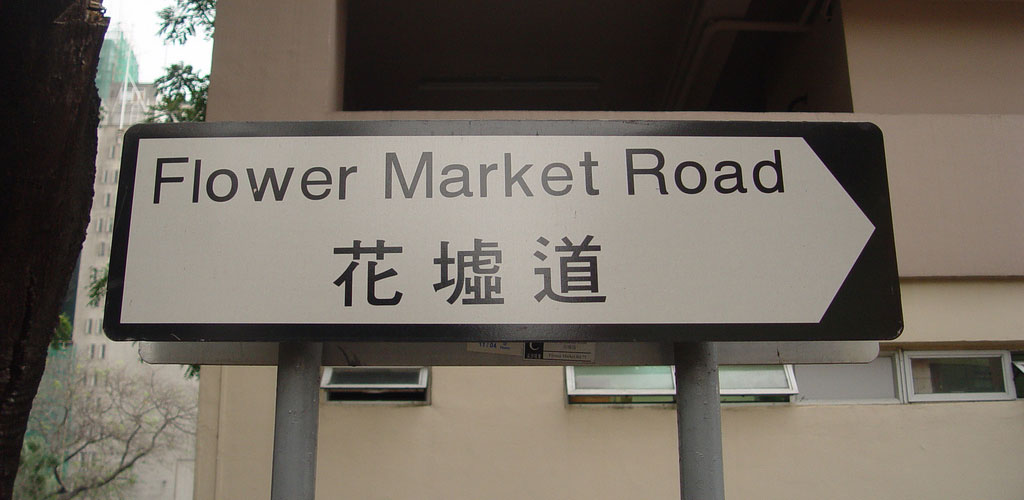
The late 1980s brought a crucial innovation: flower refrigeration. This technology allowed wholesalers to store blooms for longer periods, reducing reliance on daily harvests. Speculators and traders returned to the Fa Hui area, and the wholesale trade re-established itself on Nullah Road, closer to the present-day market. Since the 1970s, Flower Market Road has been the centre of Hong Kong's wholesale flower industry, with more than 50 plant shops clustered together. The road was officially named 花墟道 (Flower Market Road), reflecting its growing importance.
1990s: From Wholesale Hub to Tourist Destination
Originally serving shopkeepers who came to purchase stock for their retail outlets, Flower Market Road gradually became a destination in its own right. The annual Hong Kong Flower Show at Victoria Park and the Chinese New Year Fair boosted the profile of market vendors, and by the late 1990s, the public had discovered the joys of buying direct from the source.
As awareness grew, the sale of potted plants, seeds, and fertiliser expanded. Unlike many traditional Hong Kong markets that faced pressure to relocate or rebuild, Flower Market Road maintained its character through its permanent shop fronts — a stable structure that allowed it to evolve organically.
2000s: The Orchid Boom
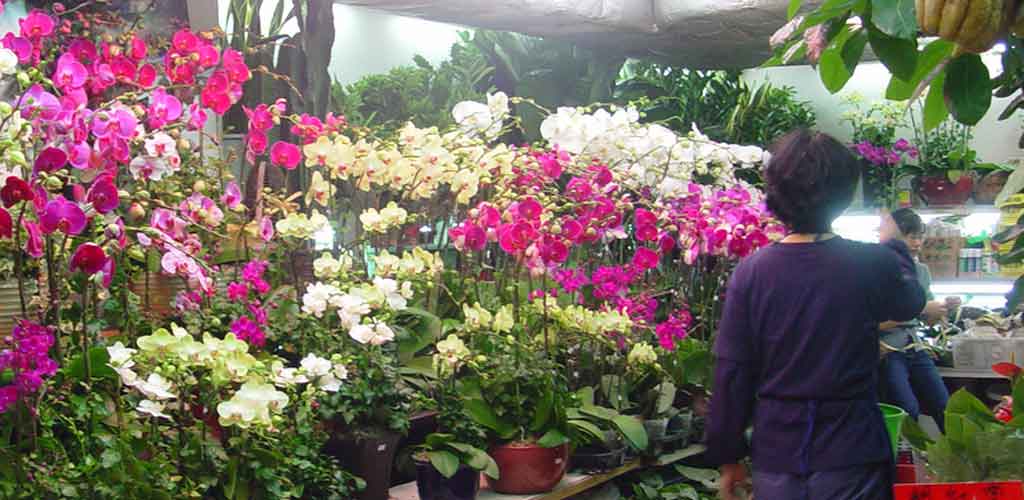
The 2000s witnessed a dramatic transformation with the development of affordable orchid hybrids. Previously, orchids had been luxury items requiring technical expertise and significant investment. The establishment of large-scale greenhouse operations in mainland China revolutionised availability, making elegant orchid varieties accessible to ordinary Hong Kong residents through Flower Market Road shops.
Due to the small living spaces that characterise Hong Kong's high-rise apartments, few residents have access to gardens. But the orchid boom proved that everyone can keep a potted plant, and the market catered to this desire for greenery on a window-sill or balcony.
Present Day: Tradition Meets Urban Pressure
Today the market houses over 100 retail and wholesale shops across Flower Market Road, Sai Yee Street, Yuen Po Street, and Prince Edward Road West. It is busy at all times of the year with both dedicated customers and curious onlookers. The street is recognised by the Hong Kong Tourism Board as one of the city's premier attractions, and flower-market.hk is listed as its official website.
Yet the market faces significant challenges. By 2025, fewer than twenty farmer stalls remained at the Mong Kok Stadium market. Local farmers are aging, and the younger generation is not taking over — a trend that reflects the wider decline of Hong Kong's agricultural sector. Most flowers sold today are imported rather than locally grown. For deeper insight into the farmers' story, the City Unseen article provides a detailed account of how local growers were gradually pushed to the margins.
URA Redevelopment (YTM-013)
In March 2024, the Urban Renewal Authority commenced the Sai Yee Street / Flower Market Road Development Scheme (YTM-013), covering approximately 31 building street numbers aged 64 to 76 years. Plans include an Urban Waterway park, a dedicated “Third Street” for the flower market, upgraded sports centres, around 1,350 residential flats, approximately 500 ancillary and 220 public parking spaces, and public open spaces with low-rise commercial buildings at Sites A2–A5. The sites are expected to be completed in 2035–36.
On 8 January 2026, the URA issued acquisition offers to property owners after the scheme was approved by the Chief Executive in Council on 8 April 2025 and gazetted on 17 April 2025. The redevelopment would substantially reshape the district, while the plan for a dedicated flower-market street is intended to retain space for the market.
Despite these pressures, the market endures as a living bridge between traditional Chinese flower symbolism and contemporary urban life. For more about the flowers themselves and their meanings, see our guides to feng shui flowers and flower varieties.